 how-to
How To Customize Campus Spaces for Better Learning Environments
Last Updated: November 2, 2026
Quick Summary
Customizing campus spaces starts with a campus space planning audit that maps how every room is actually used, then matches flexible learning space furniture to each room type. Pilot the furniture in one room for a semester, review feedback, and procure in phases rather than all at once.
- Walk every room and compare actual use to the original design before ordering seating.
- Flexible learning space furniture moves, folds, or reconfigures to support more than one teaching style.
- Test the furniture arrangement and resurface an existing whiteboard in one classroom. Evaluate both over a semester, then expand the improvements that prove most effective.
- Choose weather-resistant outdoor furnishings and place seating near entrances where students gather.
- Track room occupancy, instructor satisfaction, and repair tickets against your audit baseline.
Table of Contents
- Start with a Campus Space Planning Audit
- Match Flexible Learning Space Furniture to Each Room Type
- Add Collaborative Learning Furniture and Outdoor Campus Furniture
- Customize, Procure, and Measure the Results
- Frequently Asked Questions
Start with a Campus Space Planning Audit
Customizing furniture for diverse campus spaces starts with an honest audit of those campus spaces: walk every room, note how it's actually used, and compare that to how it was designed.
Most facilities teams skip this step, order new seating, and end up with empty chairs because the layout is still wrong.
Campus space planning maps how rooms are used today so furniture matches real teaching styles, not assumptions.
Match Flexible Learning Space Furniture to Each Room Type
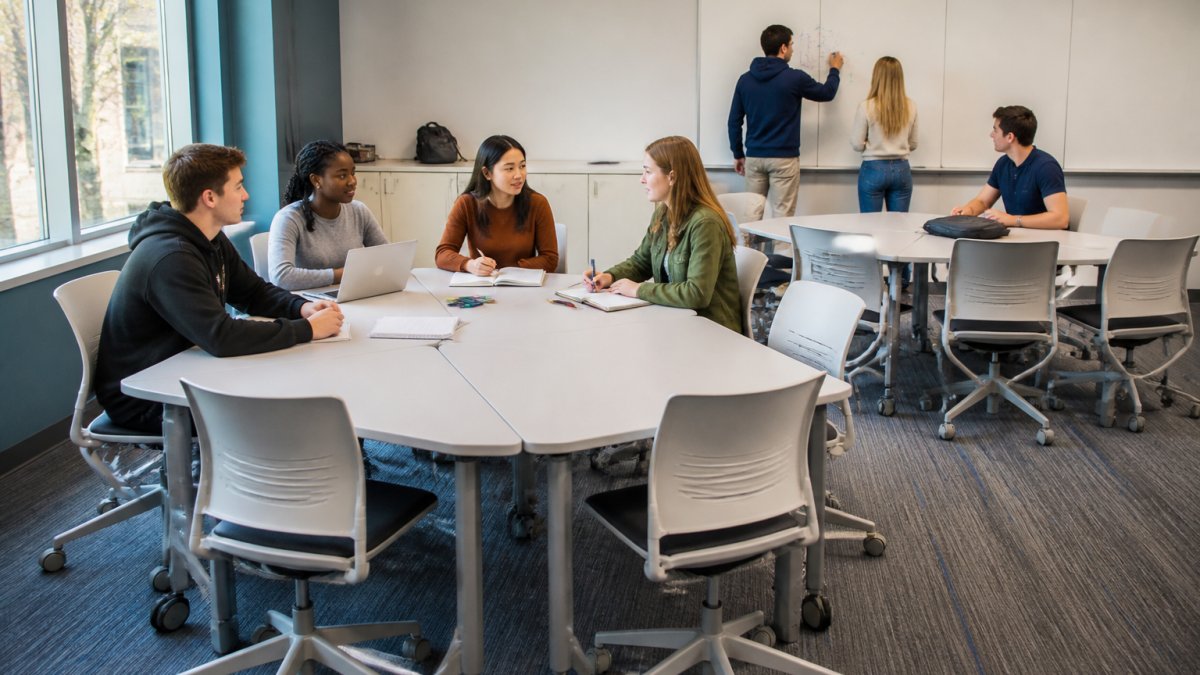
Flexible learning space furniture is seating and tables that move, fold, or reconfigure to support more than one teaching style in the same room. The right choice depends on the room, not a catalog.
Add Collaborative Learning Furniture and Outdoor Campus Furniture
Collaborative learning furniture clusters people around shared work. Outdoor campus furniture extends that idea past the building doors.
Test the kit in one room for a semester, watch what gets rearranged and what goes unused, then scale what worked.
Outdoor furnishings deserve the same planning. Choose weather-resistant materials and place seating near entrances where students already gather.
Accessibility belongs in every decision: clear paths between tables, varied seat heights, and power access that works for wheelchair users.
Customize, Procure, and Measure the Results
A practical customization workflow keeps projects on budget and on schedule. Here's the sequence we use:
Step | What Happens | Who Leads |
|---|---|---|
1. Audit | Map rooms, usage, and pain points | Facilities team |
2. Pilot | Furnish one room as a test | Facilities plus instructors |
3. Review | Gather feedback after a semester | Administrators |
4. Procure | Order in phases, not all at once | Procurement |
5. Install | Schedule around the academic calendar | Vendor and facilities |
6. Measure | Track usage, satisfaction, and repair needs | Campus operations |
Pricing depends on quantity, room count, and delivery timing, so request a quote from Concepts on Campus for current prices. Lifecycle cost matters more than sticker price: a chair that lasts a decade beats a cheaper one replaced twice.
Track room occupancy, instructor satisfaction, and repair tickets against your audit baseline.
This is where Concepts on Campus fits. We explore innovative educational solutions that combine collaborative furniture, technology, and writable surfaces. Through companies such as Think Board, Claridge, and Calyx, we introduce practical ways to create modern, flexible learning environments without major construction.
Frequently Asked Questions
How do you choose furniture for different campus spaces?
Start by auditing how each campus space is actually used, then match furniture to that activity. Classrooms need mobile tables and stackable chairs for quick reconfiguration. Student lounges need soft seating and durable benches. Group settings need collaborative learning furniture with writable surfaces. Measure the room, note power access, and confirm door widths before ordering. A space-by-space matrix keeps decisions consistent and prevents one-size-fits-all purchases that waste budget.
What furniture works best for flexible learning environments?
Flexible learning space furniture should move easily and support multiple teaching styles. Look for tables on casters, nesting chairs, lightweight mobile whiteboards, and modular seating that reconfigures for lectures, group work, or individual study. Confirm casters lock for safety and that surfaces resist daily cleaning. Technology integration, such as writable surfaces, can help the same room serve several curricula.
How can outdoor campus furniture encourage students to use shared spaces?
Outdoor campus furniture works when it is comfortable, shaded, and placed where students already walk. Choose weather-resistant benches, tables, and seating clusters near entrances and paths, and add power or Wi-Fi access points nearby. Durable materials reduce maintenance in high-traffic areas. Test one zone first, gather student feedback, then expand what gets used.
Most campuses have more underused space than they realize. The challenge is turning it into rooms students and teachers actually want to use. Concepts on Campus can help you audit, pilot, and install flexible furniture solutions that strengthen school culture and support modern teaching, all without a gut renovation. Get started with Concepts on Campus and make every corner of your campus work harder.
