 how-to
How School Culture and Community Engagement Drive Student Recruitment
Last Updated: November 5, 2026
Quick Summary
A strong school culture paired with real community engagement drives student recruitment by turning families into vocal advocates. Positive culture lifts engagement and attendance, belonging builds connectedness, and connected families generate word-of-mouth referrals that convert into enrollments.
- Families often decide in seconds whether a school feels like a place they belong.
- Give families a specific job rather than an open invitation, because specific asks convert better.
- Segment audiences: prospective families, current families, students, alumni, employers, and neighbors each need a different ask.
- Sequence recruitment work across the school year, starting with a late-summer audit and ending with spring retention and referrals.
- Assign one person to log inquiries and make the first call within one business day so leads do not go cold.
Table of Contents
- Why School Culture and Community Engagement Drive Student Recruitment
- School Culture Strategies That Make Families Choose You
- How to Increase Community Engagement in Schools Without Adding Staff
- Building School Connectedness So Students Stay and Refer Others
- Student Recruitment Strategies That Turn Goodwill Into Enrollments
- Map Your Underused Spaces Before Your Next Open House
- Frequently Asked Questions
Why School Culture and Community Engagement Drive Student Recruitment
School culture is the shared set of values, rituals, and everyday behaviors that shape how a campus feels to everyone inside it.
Families often decide in seconds whether a school feels like a place they belong.
The relationship runs in a clear chain:
- A positive school culture lifts student engagement and attendance.
- Strong engagement builds school connectedness and student belonging.
- Belonging turns families into vocal advocates who drive word-of-mouth student recruitment and enrollment conversion.
Many enrollment plans lean heavily on marketing. A stronger approach is to improve the experience families actually encounter. Below, we break down how culture, community partnerships, and smart use of campus space turn goodwill into applications.
School Culture Strategies That Make Families Choose You
The fastest school culture strategies are visible ones.
Start with these moves:
- Name your values out loud. Put them on walls, in newsletters, and in how staff greet visitors.
- Celebrate often. Recognition assemblies, student work displays, and small wins build a positive school environment people talk about.
- Make student voice routine. Advisory groups and student leadership councils give students real input on school events.
- Protect traditions. Annual events and rituals create school climate that alumni and parents remember.
What most guides miss is how much of this depends on space. A culture of collaboration needs places to collaborate. A culture of recognition needs walls that display student work.
That is where simple surface upgrades earn their keep. Peel-and-stick dry-erase film can turn a blank hallway into a space for brainstorming and announcements.
How to Increase Community Engagement in Schools Without Adding Staff
The question of how to increase community engagement in schools usually stalls on one worry: who has time? The answer is to borrow capacity rather than hire it, and to segment outreach so each audience gets an ask that fits its schedule, language, and access needs.
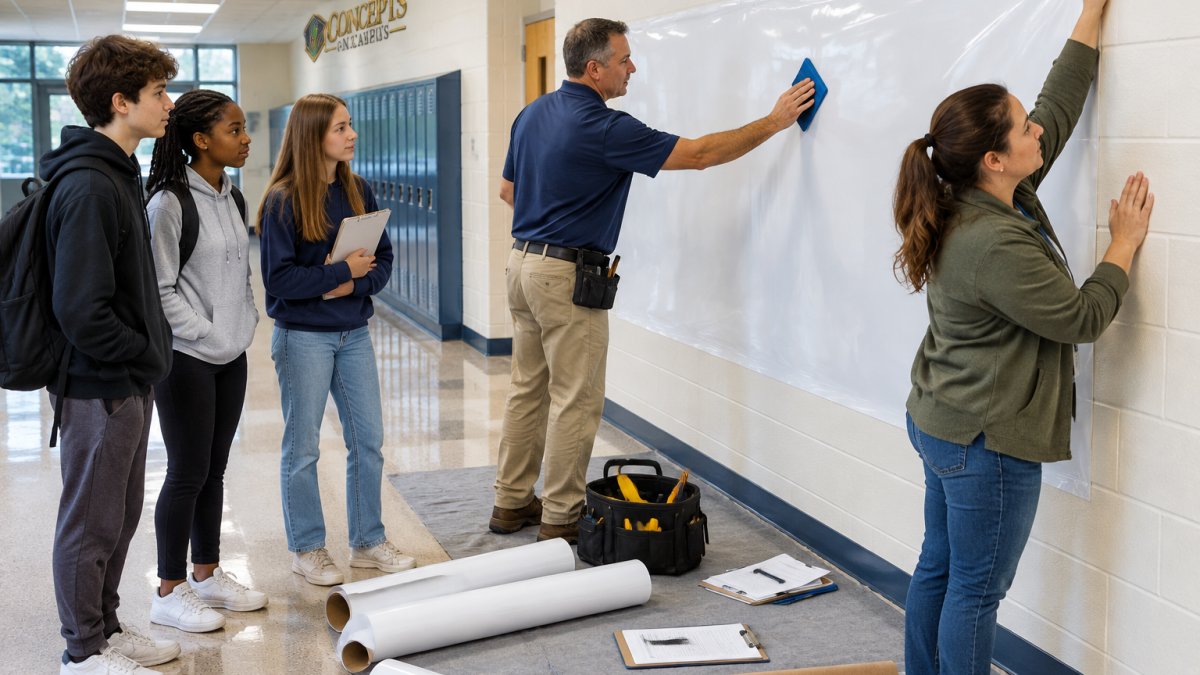
Here is how schools stretch existing staff:
- Hand the work to volunteers. PTA and PTO groups can run family nights and campus beautification days.
- Build community partnerships. Local businesses, libraries, and nonprofits often supply people and materials for events.
- Use student-led activities. Student councils can plan and staff school events with light teacher oversight.
Segment Your Audience Before You Ask
Treating "the community" as one audience is the most common reason engagement efforts underdeliver. Each group has a different reason to show up and a different barrier:
- Prospective families want to see belonging and safety in action. Invite them to events where current families are visibly happy, not to formal presentations.
- Current families want a reason to refer. Give them shareable moments, student showcases, recognition nights, and a simple way to bring a neighbor.
- Students want real decisions, not busywork. Student councils that own a budget line or an event plan stay engaged.
Remove the Barriers That Keep Families Away
The families who would benefit most from engagement are often the least able to attend. Equitable outreach means designing around real constraints:
- Language access. Translate flyers, signage, and sign-up forms into the languages spoken at home. Recruit bilingual volunteers to greet at events.
- Transportation. Offer shuttle stops, carpool coordination, or walkable satellite events in neighborhood locations.
- Work schedules. Run short shifts, evening and weekend options, and virtual participation.
Make Participation Repeatable, Not One-Time
The common mistake is treating family involvement as a one-time ask. Sustained participation comes from small, repeatable roles that fit around work schedules. Offer short shifts, clear tasks, and visible thanks.
Watch out: if your only volunteer roles require a background check, a long orientation, or a full-day commitment, you have filtered out most of your capacity. Create at least one low-barrier role, greeting, sorting, setup, or display refresh, a new family can fill on short notice.
Give Volunteers a Space That Works
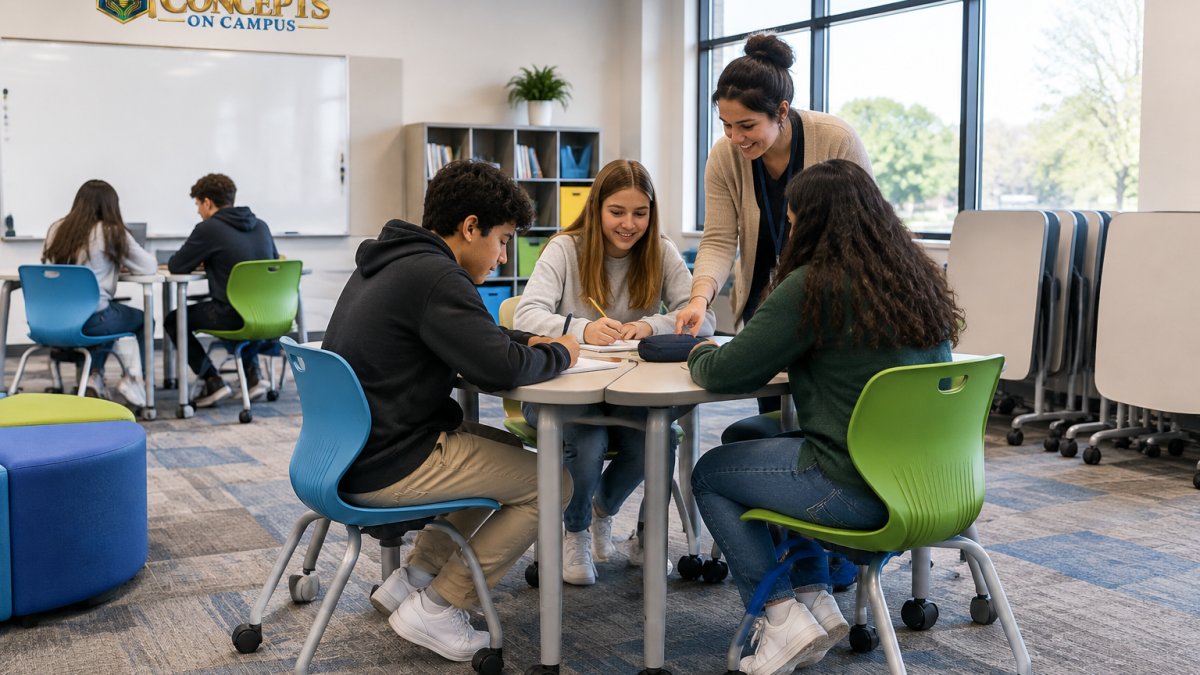
Volunteer energy dies in spaces that are hard to use. A writable wall or magnetic-receptive surface in the front office or family resource room lets volunteers post schedules, update welcome messages, and rotate student work without waiting on staff. Peel-and-stick dry-erase film can turn an unused corner into a self-serve communication hub, and magnetic-receptive surfaces let volunteers swap displays without tools.
Building School Connectedness So Students Stay and Refer Others
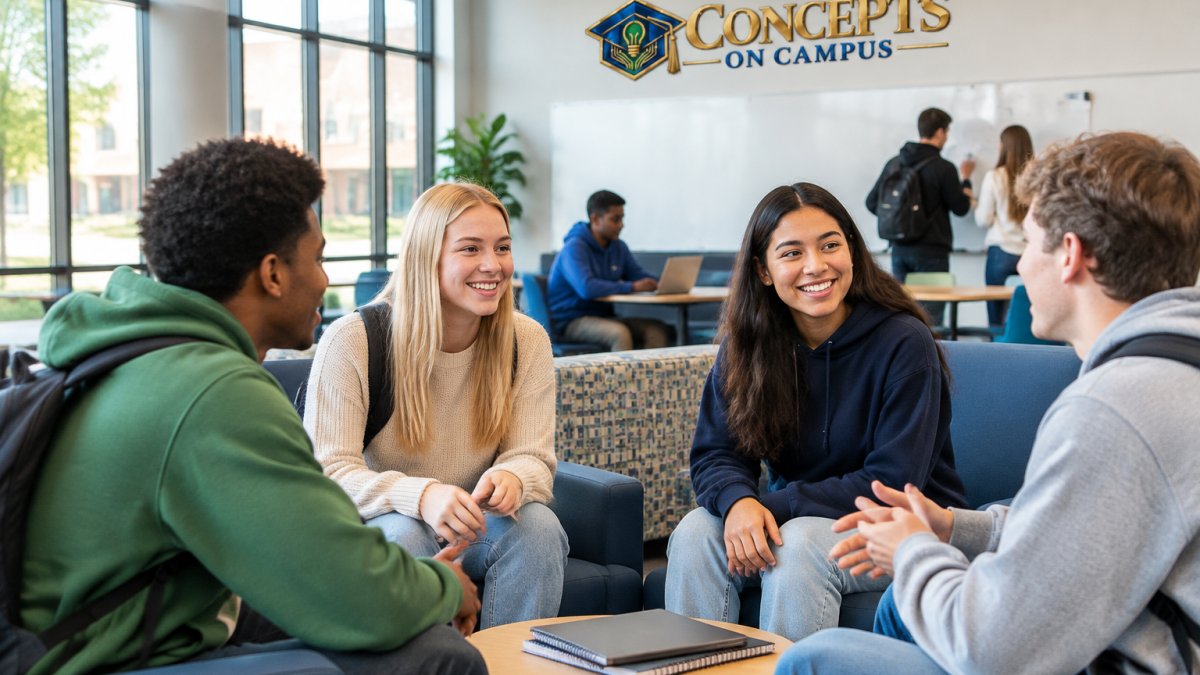
School connectedness is the sense that a student is known, valued, and part of something (the CDC).
Explore Think Board Solutions Today →
Peer mentoring and advisory groups do the heavy lifting here. Pair older students with newer ones.
Watch out: connectedness dies in spaces that feel institutional.
Track it simply. Ask students in a short survey how much they feel they belong, and watch attendance and activity participation.
Student Recruitment Strategies That Turn Goodwill Into Enrollments
Goodwill does not enroll students on its own. Student recruitment strategies have to move families from awareness to application, treating your funnel like a funnel, with named owners, a sequence, and numbers you actually collect.
A Sequenced Implementation Plan
Most schools try to do everything at once. A better approach is to sequence the work across a school year so each stage builds on the last.
- Audit (late summer). Walk the campus, list dead zones, and inventory every touchpoint a prospective family encounters, website, front office, tour route, event signage. Assign one owner, typically an enrollment director or assistant principal, with a small cross-functional team.
- Fix the experience (early fall). Repurpose underused spaces, refresh displays, and make the front office welcoming before you invite anyone in. Culture work and space work happen together.
- Build the audience (fall). Segment prospective families, current families, alumni, and community partners. Launch segmented outreach, referral asks to current families, mentor invitations to alumni, partnership offers to local employers.
- Run events (winter). Host open houses and campus tours where current families visibly participate. Staff each event with a greeter, a tour lead, and a follow-up owner.
- Convert (late winter). Simplify application steps, set a follow-up cadence (same-day acknowledgment, one-week check-in, two-week nudge), and track where families drop off.
- Retain and refer (spring). Survey re-enrolling families, thank referrers publicly, and feed results into next year's audit.
Define Your Recruitment Funnel Measures
A funnel is only useful if each stage has a definition everyone agrees on. Use these measures and assign a collection owner for each:
| Funnel stage | What to track | Why it matters |
|---|---|---|
| Awareness | Event attendance, tour requests, website inquiry form submissions | Shows reach of outreach |
| Interest | Open house sign-ins, inquiry forms, referral cards returned | Measures real curiosity |
| Consideration | Tour-to-application rate, application starts | Tests your messaging and tour quality |
| Conversion | Enrolled vs. applied, days from application to decision | Reveals follow-up gaps |
| Retention | Re-enrollment rate, family survey scores | Confirms culture is working |
Survey feedback at each stage tells you where the funnel leaks. Fix the leak before you spend more on recruitment communications.
Budget, Staffing, and Low-Cost Options
Recruitment work does not require a large budget, but it does require named ownership. Most schools can run the sequence above with existing staff plus a small allocation for event supplies, translation, and transportation support. Low-cost moves with outsized returns include:
- Reusing existing spaces instead of renting venues.
- Recruiting bilingual volunteers instead of paid interpreters where appropriate.
- Refreshing displays with peel-and-stick dry-erase film and magnetic-receptive surfaces rather than commissioning new signage.
Watch out: if no one owns follow-up, your best event will still produce a leaky funnel. Assign one person to log inquiries and make the first call within one business day.
Connect Culture Work to Enrollment Results
The link between culture and recruitment becomes credible when you show baseline and follow-up numbers. Record current tour requests, open house attendance, application starts, and re-enrollment rate before you start, then compare after one cycle. Schools often find that improving the physical experience families encounter can matter as much as increasing ad spend. That is why space upgrades and culture work belong in the recruitment plan, not in a separate facilities conversation.
Map Your Underused Spaces Before Your Next Open House
An open house is a recruitment audition. Every space a family walks through either supports your story or undercuts it.
Walk your campus with fresh eyes and list the dead zones: empty corners, blank hallways, storage rooms, and unused walls.
If you are preparing to showcase your campus, our guide on customizing campus spaces for better learning environments walks through the practical steps.
Families choose schools that feel alive, and that feeling comes from culture, community, and the spaces that hold them.
Frequently Asked Questions
How can community partnerships support student recruitment?
Partnerships put your school in front of families you would not otherwise reach. A local business that hosts a career night, a library that runs a story hour in your media center, or a youth league that uses your gym all create word-of-mouth referrals. Give each partner a simple role, a date, and a way to invite their own networks. Track which partners send families to your open house so you can repeat what works and drop what does not.
What are practical ways to make a school more welcoming to prospective students?
Start with the front door and the first hallway. Clear signage, student work on display, and a visible welcome desk change how a tour feels in the first 30 seconds. Add student tour guides who can speak honestly about their day. Keep common areas tidy and well lit, and give visitors a place to sit and ask questions. Small physical fixes, like resurfacing a worn wall with peel-and-stick dry-erase film so student clubs can post schedules, signal that the building is cared for.
How can schools measure student and family engagement?
Pick a small set of numbers you can pull every term: open house attendance, tour requests, application starts, completed enrollments, family event turnout, and volunteer hours. Add one short survey after each major event asking whether families felt welcome and informed. Compare results by grade level and by neighborhood so you can see where outreach is thin. Review the numbers with your leadership team each quarter and adjust one tactic at a time.
What is school connectedness, and how does it affect student success?
School connectedness is the sense that a student belongs, is known by adults, and matters to the school community. Students who feel connected show up more often, take part in activities, and speak well of the school to neighbors and friends. That last point matters for recruitment: current families are your most credible messengers. Build connectedness through advisory groups, peer mentoring, student leadership roles, and recognition that reaches beyond the honor roll.