 ultimate-guide
School Furniture for Collaborative Learning That Works
Last Updated: November 3, 2026
Quick Summary
School furniture for collaborative learning is movable, reconfigurable seating and work surfaces that let students regroup and work together without waiting on a teacher to rearrange the room. Modular tables in pods reconfigure in minutes, and locking casters keep mobile desks stable once positioned.
- The practical test for flexible furniture is whether one student can reset the room alone.
- Specify locking casters and confirm desks nest or fold for storage.
- Start layout planning with zones, not a furniture list, and keep traffic paths clear.
- Tablet arms and opening fronts give students a private workspace on demand.
- Whiteboard resurfacing modernizes aging rooms without construction.
Table of Contents
- How School Furniture for Collaborative Learning Changes Group Work
- Choosing Flexible Classroom Furniture That Supports Every Learning Mode
- Classroom Layout Design Best Practices for Group and Individual Work
- Where to Start With School Furniture for Collaborative Learning
- Frequently Asked Questions
How School Furniture for Collaborative Learning Changes Group Work
School furniture for collaborative learning is the physical setup that lets students move, regroup, and work together without waiting on a teacher to rearrange the room. Modular tables and wheeled desks let one room support several modes.
Choosing Flexible Classroom Furniture That Supports Every Learning Mode
Flexible classroom furniture is movable, reconfigurable seating and work surfaces that shift between teacher-led instruction, small-group learning, and individual work in minutes. The practical test: can one student reset the room alone?
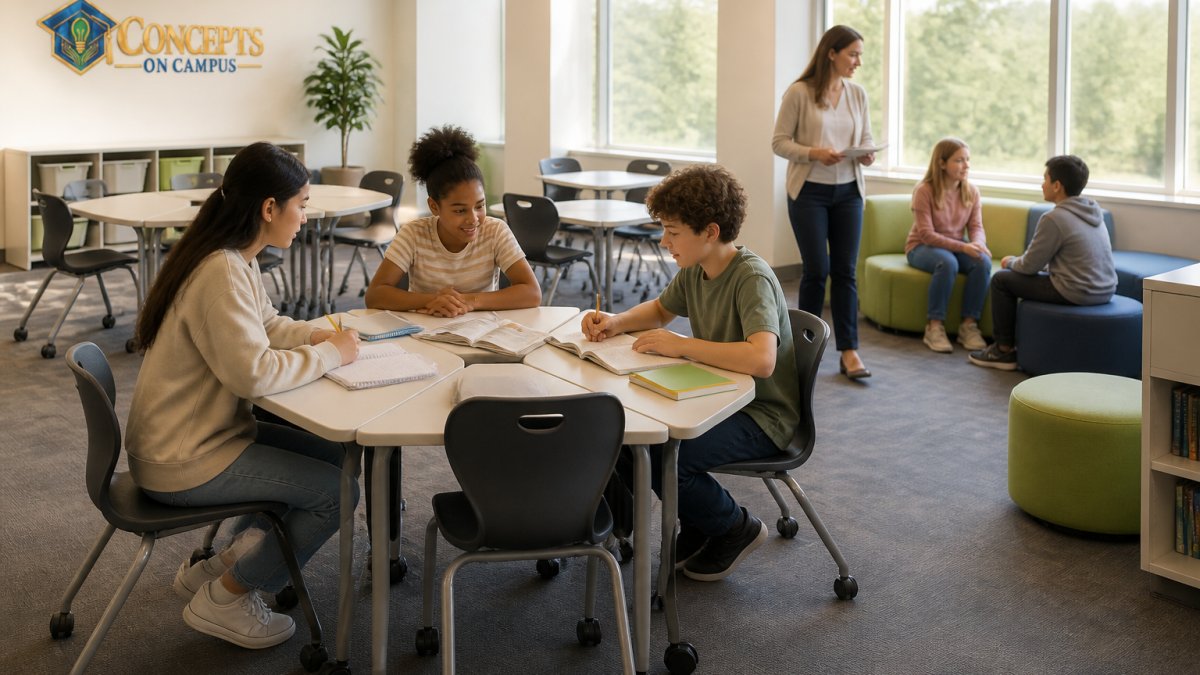
Mobility only pays off when casters lock, so specify locking casters and confirm desks nest or fold for storage. Peel-and-stick dry-erase film from Think Board can turn tabletops, walls, and old whiteboards into writable, magnetic-receptive space without replacing the furniture underneath.
Explore Think Board Solutions Today →
Classroom Layout Design Best Practices for Group and Individual Work
Start with zones, not a furniture list: map teacher-led instruction, small-group learning, and solo work, then place learning pods and breakout spaces accordingly, keeping traffic paths clear. For deeper guidance, see how to customize campus spaces for better learning environments. Modernizing old classrooms without construction often comes down to a few practical moves, such as resurfacing existing surfaces instead of replacing them.
| Goal | Furniture move | Why it works |
|---|---|---|
| Group work | Modular tables in pods | Reconfigures in minutes |
| Individual work | Tablet arms, opening fronts | Private workspace on demand |
| Aging rooms | Whiteboard resurfacing | Skips construction entirely |
Where to Start With School Furniture for Collaborative Learning
The hard part is not picking tables. It is committing to a room that changes during the day, then training teachers to use it. CONCEPTS ON CAMPUS helps districts modernize existing classrooms through strategic furniture, surface upgrades, and technology integration, with installation services available. Get started with CONCEPTS ON CAMPUS and turn underused rooms into collaborative learning zones without a gut renovation.
Frequently Asked Questions
What features should I look for in collaborative learning furniture?
Prioritize locking casters so desks stay put during group work but move easily for reconfiguration, modular tables that combine into shared surfaces, and seating that suits both individual and group tasks. Look for markerboard or dry-erase tabletop surfaces that let students sketch ideas directly, plus tablet arms and adjustable heights for ergonomic comfort. Reconfigurable furniture should support teacher-led instruction, small-group learning, and independent work without a full room reset between activities.
How does flexible classroom furniture improve student engagement?
Flexible furniture lets teachers shift between learning modes quickly, so group work starts in seconds rather than minutes. Mobile desks and soft seating support peer collaboration and active learning, while students can choose seating that keeps them comfortable and focused. When the room adapts to the activity, interaction rises and off-task time falls. Schools also gain better space utilization from the same footprint, since one room can serve whole-class lessons, learning pods, and breakout spaces.
How do you modernize an old classroom without major construction?
Start with furniture and surfaces rather than walls. Replace fixed desks with wheeled, modular tables and add soft seating for breakout zones. Apply peel-and-stick dry-erase film from Think Board to existing walls, doors, and table surfaces to create collaborative writing space, with magnetic-receptive and custom-printed options available. These upgrades avoid the cost and disruption of construction while transforming how the room functions. Concepts on Campus offers installation services.