 blog
7 Questions to Ask Before a School Furniture Upgrade
Quick Summary
Before buying school renovation furniture, weigh daily use, durability, total cost of ownership over the product lifecycle, adaptability, and installation fit. Ask vendors for written specifications and references from comparable campuses, and build a simple comparison of purchase, installation, service life, and upkeep.
- Start by listing how each room is actually used, since libraries, labs, and homerooms have different demands.
- Request product specifications in writing, including materials, finishes, weight limits, and warranty terms.
- Purchase price is only the first number; include delivery, installation, service life, and repairs.
- Test flexible furniture in person to confirm casters lock and chairs stay stable.
- Sequence surface work before furniture placement and set delivery windows in writing.
Table of Contents
- Why School Renovation Furniture Decisions Carry Long-Term Weight
- Classroom Furniture Buying Guide: Criteria That Matter Most
- School Furniture Packages Versus Individual Pieces
- Flexible Classroom Seating and Adaptable Layouts
- School Renovation Planning Checklist for Phasing and Installation
- Booking Your Campus Walkthrough to Plan Your Upgrade
- Frequently Asked Questions
Why School Renovation Furniture Decisions Carry Long-Term Weight
Last Updated: November 7, 2026
School renovation furniture is one of the longest-lived line items in a renovation, and one of the easiest to get wrong. The desks, tables, and storage a district installs this year will shape daily classroom use for a decade or more. Facilities directors who treat the purchase as a simple catalog order often discover, a few years later, that the pieces don't fit how teachers actually teach.
Think Board Resurfacing & Campus Solutions helps principals and facilities leaders across Texas, Oklahoma, Arkansas, Louisiana and Kansas explore campus improvement options. Furniture decisions are often made under budget pressure, with the installation schedule as the main constraint, and the long-term fit can get less attention than it deserves. Before committing, it helps to ask a few specific questions.
The seven questions below are meant to be used as a working checklist. They are not a ranking of furniture brands, and they don't assume any single solution is right for every campus.
Classroom Furniture Buying Guide: Criteria That Matter Most
A useful furniture decision starts with criteria, not catalog photos. Most campuses should weigh four factors: how the furniture holds up to daily use, what it costs over its full life, how well it adapts to changing instruction, and how it fits the installation schedule.
Start by listing how each room is actually used. A library, a science lab, and a middle school homeroom have different demands, and a single furniture standard rarely fits all of them. Ask teachers and students which pieces they rely on, which ones get in the way, and what they wish they could rearrange more easily.
Next, request product specifications in writing. Look for construction materials, finish types, weight limits, and warranty terms, and compare them side by side. Where a warranty is offered, read what it covers and what it excludes before relying on it.
Durability and Wear Resistance Under Daily Use
Durability is where early savings often disappear. A table that looks sturdy in a showroom may chip, wobble, or stain within a year of classroom use. Ask vendors how their finishes handle repeated cleaning with standard school-approved products, and whether edge banding and joints are reinforced for heavy use.
Request references from comparable campuses, and ask those facilities how the furniture held up after a full school year. Samples and field observations usually tell you more than marketing language.
Total Cost of Ownership Over the Product Lifecycle
The purchase price is only the first number. Total cost of ownership includes delivery, installation, the expected service life, repair and replacement parts, and the cost of disposal or resale at the end of use. A cheaper piece that needs replacement at year five can cost more than a better-built option that lasts twice as long.
Build a simple comparison: purchase cost, installation cost, expected years of service, and estimated annual maintenance. Pricing depends on quantity, delivery timing, and configuration, so request current quotes from each vendor rather than relying on published figures.
The article lists four factors most campuses should weigh when choosing classroom furniture.
| Criterion | What to check | Why it matters |
|---|---|---|
| Daily use | How each room is used | Rooms have different demands |
| Durability | Finishes, cleaning, references | Early savings can disappear |
| Total cost | Purchase, install, service life, upkeep | Cheaper pieces can cost more |
| Adaptability | Movement, locking, stability | Supports changing instruction |
| Installation fit | Schedule and room readiness | Avoids delivery timing problems |
School Furniture Packages Versus Individual Pieces
Furniture packages promise convenience. A single vendor supplies tables, chairs, storage, and sometimes soft seating in a coordinated set, which can simplify ordering. For a whole-building renovation with a uniform design direction, a package may be the practical choice.
Individual pieces offer more control. Mixing products lets a campus match each room to its purpose: sturdier tables for science labs, lighter mobile units for collaboration spaces, and specialized storage where it's needed. Explore furniture that supports collaborative learning for guidance on choosing those pieces. The tradeoff is more coordination, more vendors to manage, and a greater risk that finishes and heights won't match.
A reasonable middle path is to specify a core package for high-traffic rooms and select individual pieces for specialized areas. Whichever route you choose, confirm that all components are rated for the same age group and use case.
Flexible Classroom Seating and Adaptable Layouts
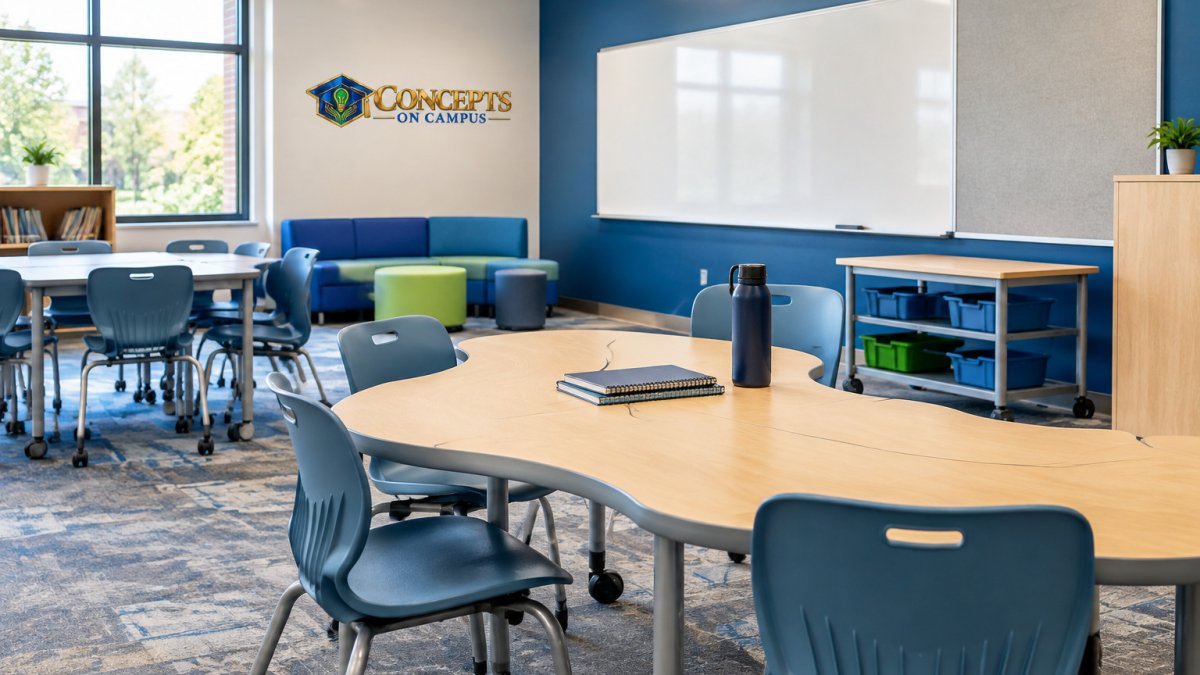
Flexible seating has moved from an experiment to a common request. Rooms that can shift between lecture, small-group, and project setups tend to serve a wider range of lessons. The key word is "adaptable." Furniture that moves easily, stacks or nests when needed, and locks securely in place is more useful than pieces that are merely colorful.

When evaluating flexible options, test the movement in person. Can a teacher reconfigure the room in a few minutes? Do casters lock reliably? Do chairs stay stable when students lean back? Ask for a sample set in an actual classroom before committing to a full order.
Flexibility also has a cost. Mobile furniture needs more maintenance, and its finishes may wear faster. Factor that into the lifecycle estimate.
School Renovation Planning Checklist for Phasing and Installation
Installation logistics can make or break a schedule. For ideas on customizing campus spaces for better learning environments, review this guide alongside your phasing plan.
A practical phasing sequence, from the rooms with the simplest access and most urgent need outward:
- Confirm the scope room by room. Note which rooms can be emptied, which must stay in use, and which can be relocated temporarily.
- Verify the path before you order. Measure doorways, hallway turns, stairwells, and elevator capacity against the largest piece in the order. A table that fits the classroom may not fit the corridor.
- Sequence surface work before furniture. If whiteboard, chalkboard, or writable wall resurfacing is part of the same renovation, schedule it before furniture placement so crews are not working around new desks.
- Set delivery windows in writing. Ask whether vendors can deliver after hours or on weekends, and confirm who receives and signs for the shipment.
- Plan storage and staging. New furniture often arrives before the room is cleared; identify a secure, weather-tight staging area and confirm who is responsible for it.
- Schedule assembly and placement separately from delivery. Assembly labor, unpacking, and debris removal are frequently quoted as separate line items.
- Build in time for punch lists and adjustments before students return. Casters, glides, and height settings usually need a second pass once the room is in use.
- Assign a single campus contact to coordinate vendor, custodial, and teaching staff, and keep a record of product serial numbers, warranty dates, and cleaning instructions for each room.
Phasing also helps budgets. Splitting a project into stages can spread costs across fiscal years, but confirm that early phases are complete enough to be usable on their own. A room with new tables but no storage or writable surface may not function until the next phase lands.
Watch out: classroom downtime is the cost that rarely appears on a quote. Every day a room is out of service has to be absorbed somewhere, so sequence the highest-disruption rooms into breaks, summer windows, or periods when a nearby space can absorb the class.
If you are weighing furniture upgrades alongside whiteboard, collaboration wall, or media wall improvements, a campus walkthrough can help you see how those pieces work together in the same room. To request a walkthrough or sample brochure, visit Request a Campus Walkthrough / Sample Brochure.
Booking Your Campus Walkthrough to Plan Your Upgrade
Campus furniture decisions can benefit from walking the actual rooms with the people who use them. Measurements, sight lines, electrical access, and traffic patterns are easy to overlook from a catalog page but obvious on site.
If you are weighing furniture upgrades alongside whiteboard, collaboration wall, or media wall improvements, a campus walkthrough lets you see how those pieces will work together in the same room. Think Board Resurfacing & Campus Solutions offers campus walkthroughs and sample brochures for principals and facilities teams in Texas, Oklahoma, Arkansas, Louisiana and Kansas, so you can review options before committing to a plan.
To request a walkthrough or sample brochure, visit Request a Campus Walkthrough / Sample Brochure. Pricing depends on quantity, timing, and scope, so you will receive a quote tailored to your campus rather than a generic figure.
Frequently Asked Questions
What should schools consider when upgrading furniture during a renovation?
Start with the learning goals for each room, then check durability, ergonomics, storage needs, and how the furniture fits existing wiring, walls and floor plans. Confirm delivery windows and installation sequencing with your contractor so furniture arrives after finish work is complete. Ask vendors for product specifications and warranty terms in writing, and compare total lifecycle cost rather than purchase price alone.
Is it better to buy school furniture in packages or select items individually?
Packages can simplify ordering and help coordinate style and dimensions across a room, while individual selection gives you control over specific needs such as accessibility, storage, or specialized tables. Many facilities teams mix both approaches, buying a core package and adding specialty pieces. Pricing depends on quantity, dates and delivery, so request quotes for both options before deciding.
How can schools plan furniture upgrades around existing classroom technology?
Map outlets, display mounts, and writing surfaces before selecting furniture so tables and storage do not block access or sightlines. Choose work surfaces and mounting heights that accommodate current equipment and planned upgrades. Involve your technology staff early to avoid rework once furniture is installed.
How do schools make renovated learning spaces more collaborative?
Group seating in clusters, provide writable and magnetic-receptive surfaces where students can share ideas, and keep storage within reach so materials stay accessible during group work. Writable collaboration walls and media walls can extend a room's teaching area without major construction. Request a campus walkthrough to see how these options could fit your existing spaces.